My Journey
I entered Industrial Design through an unusual route. Before ID, I studied Chemical Engineering and Innovation Management. Chemical Engineering shaped how I see research and development: as a place where disciplines meet and technical systems are built through experimentation. Innovation Management gave me the complementary view: how organisations turn ideas into value, how markets are analysed, and how entrepreneurship, finance and IP decide whether a concept survives outside the studio.
What both lacked was the beginning of the creation cycle: the actual making and thinking of the product itself. Joining ID and committing to the dual degree was a deliberate move to close that gap. I now treat IM and ID as two sides of one process: one helps me understand value, strategy and systems; the other helps me embody and test human experience.
When I entered the master after the pre-master, I had soft skills but few hard ones. My early development focused on sketching, Fusion 360, foamboard modelling, 3D printing, electronics and prototyping. At first I treated these tools as executors of pre-formed ideas, but Constructive Design Research, reflection-in-action and material-driven design changed that. Making became a way of generating knowledge, not only of producing it.
During M1.2, this sharpened. I became aware of recurring weaknesses: I kept too many options open, took on too much myself, and involved validation too late. These became explicit learning goals in my FMP PDP. The period also reframed my professional identity from music interface design toward sound, haptics and interactive materials as means to create multimodal, narrative-driven experiences.
My Journey
I entered Industrial Design through an unusual route. Before ID, I studied Chemical Engineering and Innovation Management. Chemical Engineering shaped how I see research and development: as a place where disciplines meet and technical systems are built through experimentation. Innovation Management gave me the complementary view: how organisations turn ideas into value, how markets are analysed, and how entrepreneurship, finance and IP decide whether a concept survives outside the studio.
What both lacked was the beginning of the creation cycle: the actual making and thinking of the product itself. Joining ID and committing to the dual degree was a deliberate move to close that gap. I now treat IM and ID as two sides of one process: one helps me understand value, strategy and systems; the other helps me embody and test human experience.
When I entered the master after the pre-master, I had soft skills but few hard ones. My early development focused on sketching, Fusion 360, foamboard modelling, 3D printing, electronics and prototyping. At first I treated these tools as executors of pre-formed ideas, but Constructive Design Research, reflection-in-action and material-driven design changed that. Making became a way of generating knowledge, not only of producing it.
During M1.2, this sharpened. I became aware of recurring weaknesses: I kept too many options open, took on too much myself, and involved validation too late. These became explicit learning goals in my FMP PDP. The period also reframed my professional identity from music interface design toward sound, haptics and interactive materials as means to create multimodal, narrative-driven experiences.
TECHNOLOGY & REALIZATION
TECHNOLOGY & REALIZATION
Before the master I had barely built anything physical myself. T&R became the area that let me make abstract sensory ideas experienceable. In M1.1 I learned Arduino, OOCSI, electronics and 3D printing through a connected bat-monitoring system. In CDR I used TPU printing, air pumps and custom circuits to prototype a soft robotic blood-pressure cuff.
Before the master I had barely built anything physical myself. T&R became the area that let me make abstract sensory ideas experienceable. In M1.1 I learned Arduino, OOCSI, electronics and 3D printing through a connected bat-monitoring system. In CDR I used TPU printing, air pumps and custom circuits to prototype a soft robotic blood-pressure cuff.
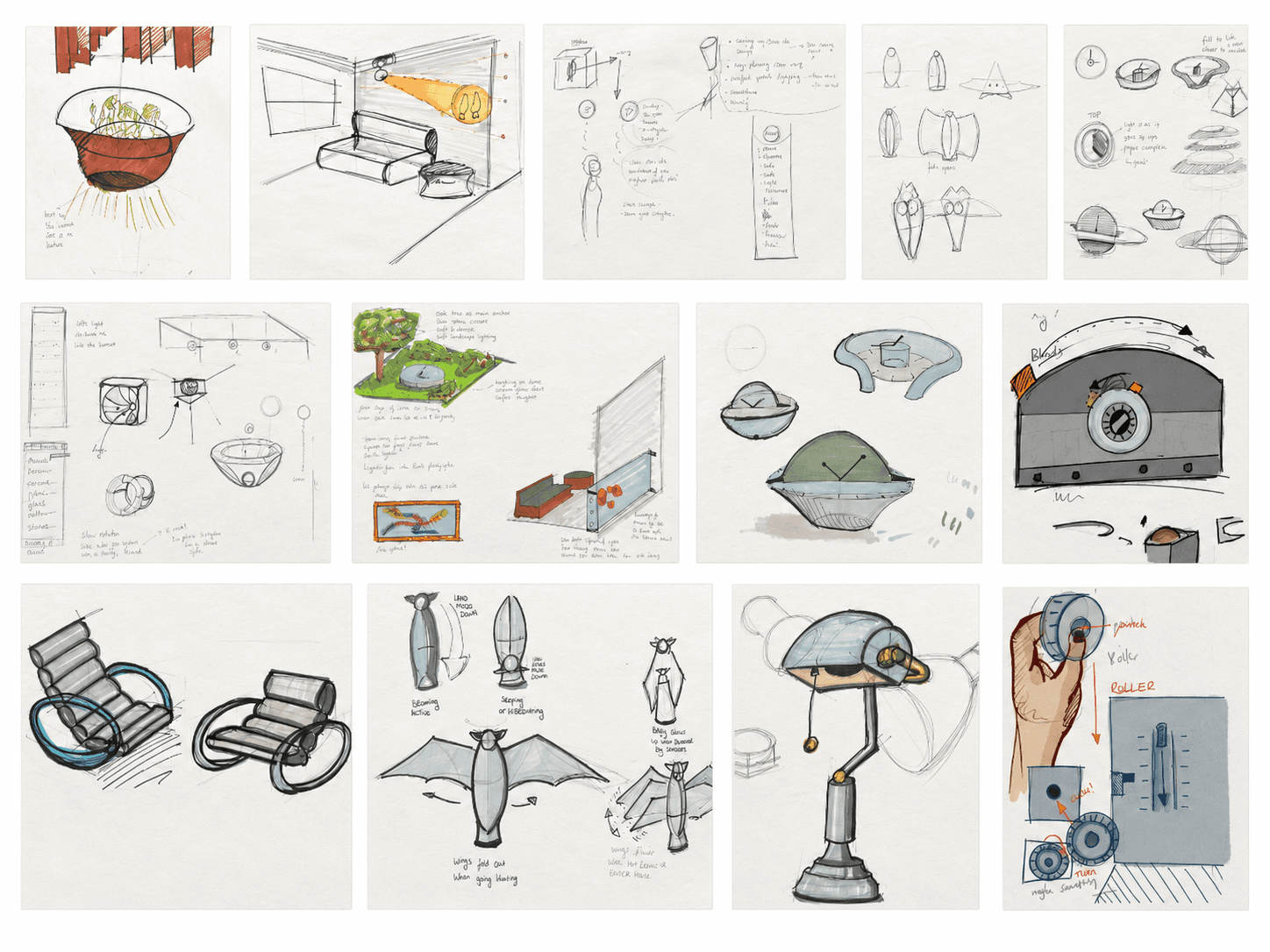
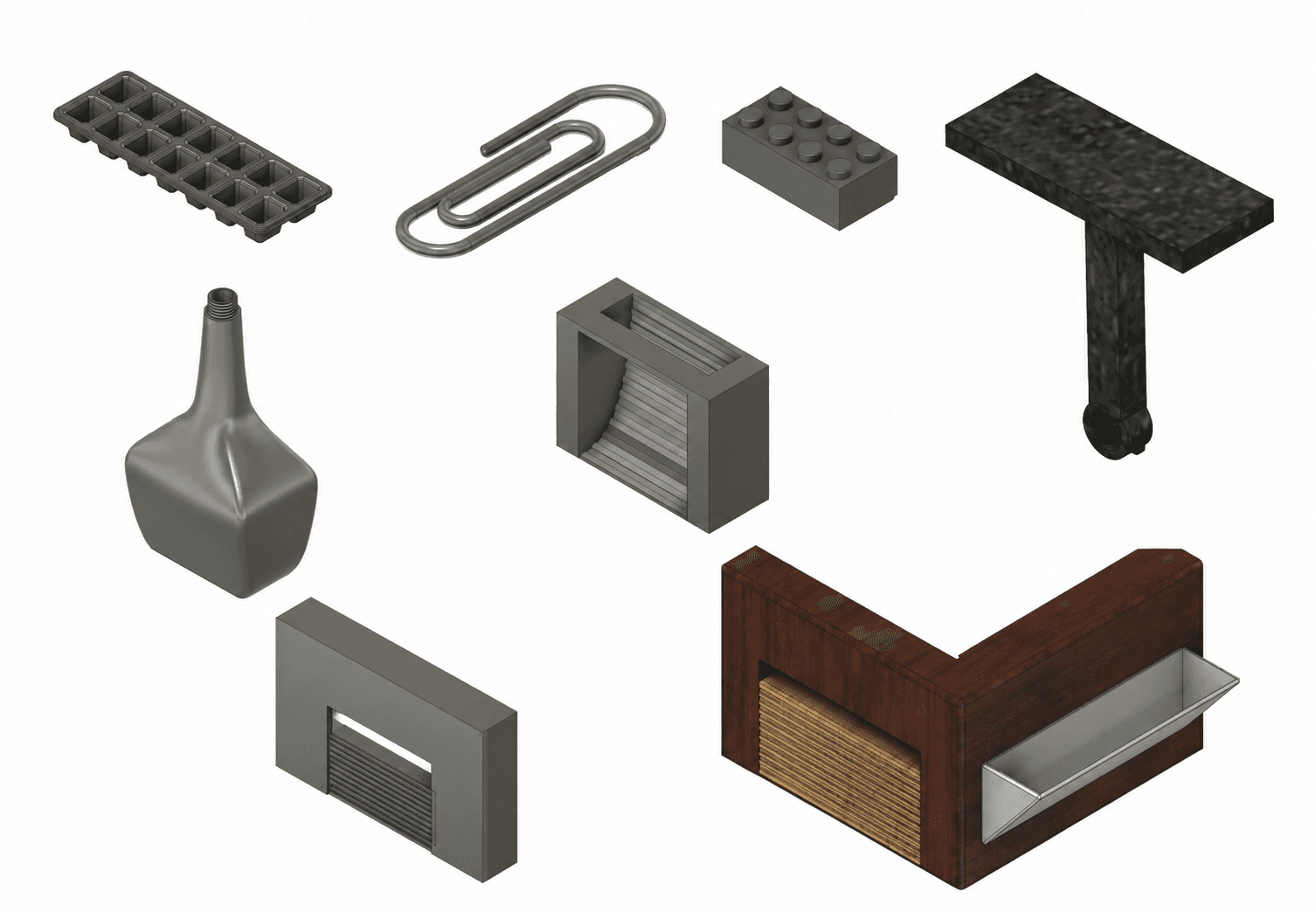

Learning sketching, Modelling, and prototyping
In Interactive Materiality I turned a ventilation tube into an interactive material via capacitive sensing, printed actuation and sound. Later projects extended this into haptics, Unity, hand tracking and spatial audio.
These projects shifted my view: technology is not only implementation, it reveals interaction possibilities. T&R became central to my process, I make to test what an interaction feels like, but also to discover what it could become.
In Interactive Materiality I turned a ventilation tube into an interactive material via capacitive sensing, printed actuation and sound. Later projects extended this into haptics, Unity, hand tracking and spatial audio.
These projects shifted my view: technology is not only implementation, it reveals interaction possibilities. T&R became central to my process, I make to test what an interaction feels like, but also to discover what it could become.

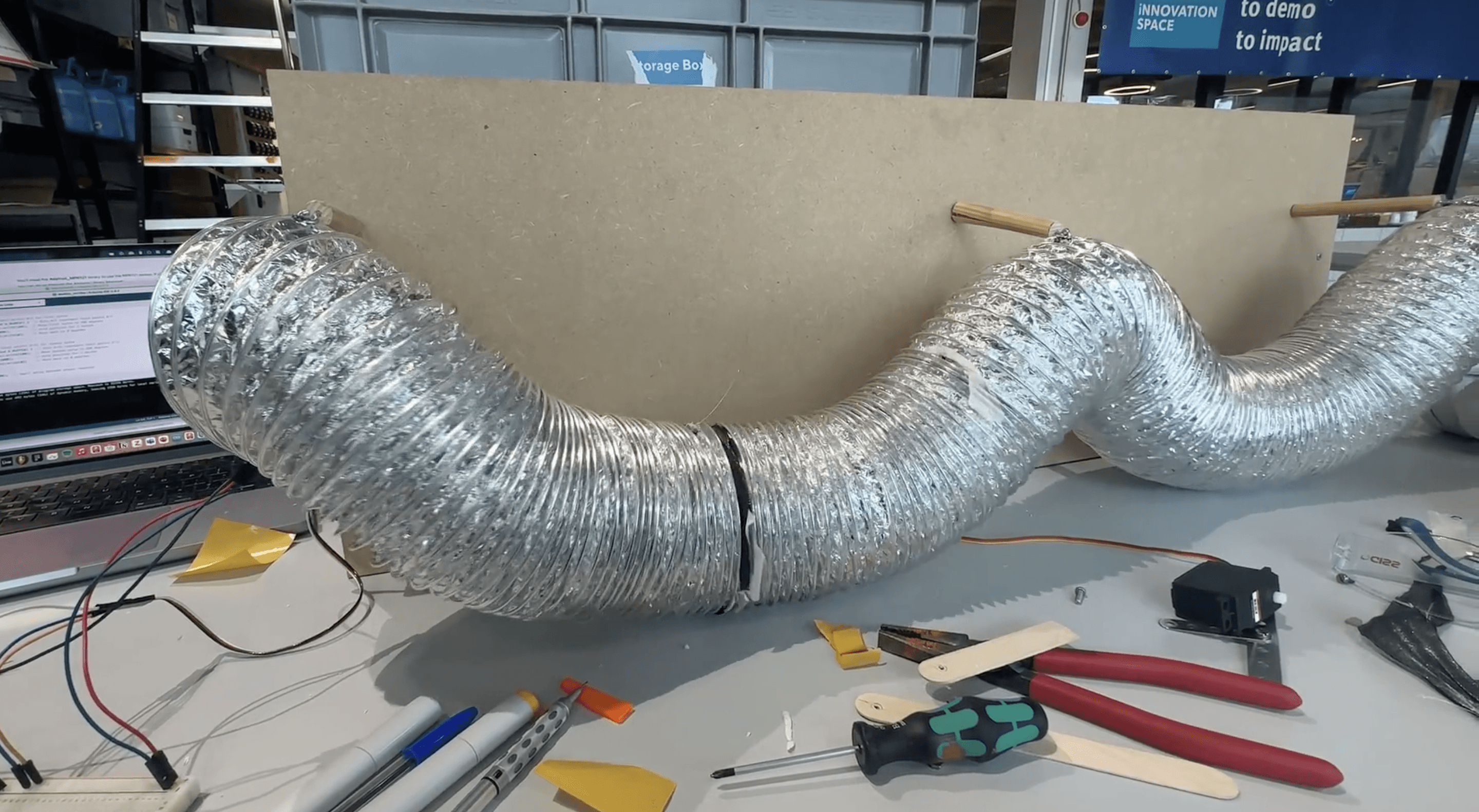


Interactive prototypes from mechanical ideation to working prototpye
CREATIVITY & AESTHETICS
CREATIVITY & AESTHETICS
The core of my work became multimodal experiences combining sound, haptics, visuals and material behaviour. DaoIOT taught me affordances, emergence and modular services. The Sound of Smart Things and C&A of Data & AI gave me vocabulary for designing with sound and data as aesthetics. Interactive Materiality then showed how subtleties, dynamics, expression, haptics and sound can form one expressive interaction loop.
C&A let me move from layering sensory effects to designing coherent experiences where sound, touch, movement and visuals strengthen the same narrative. I use aesthetic qualities not to make prototypes attractive, but to communicate behaviour, atmosphere and meaning using high quality videos, demo's, audio and visuals.
The core of my work became multimodal experiences combining sound, haptics, visuals and material behaviour. DaoIOT taught me affordances, emergence and modular services. The Sound of Smart Things and C&A of Data & AI gave me vocabulary for designing with sound and data as aesthetics. Interactive Materiality then showed how subtleties, dynamics, expression, haptics and sound can form one expressive interaction loop.
C&A let me move from layering sensory effects to designing coherent experiences where sound, touch, movement and visuals strengthen the same narrative. I use aesthetic qualities not to make prototypes attractive, but to communicate behaviour, atmosphere and meaning using high quality videos, demo's, audio and visuals.
From aesthetics of interaction (left) to subtleties , dynamic form, and expression (right)
High quality video. Editing, sound design, and music done by me. Videography by Sem Jordaan
User & Society
User & Society
The dual degree gave me both theoretical and applied research foundations. IM taught me quantitative and qualitative methods, statistics, system dynamics and organisational behaviour. ID made these experiential through lab and studio methods, material-driven design, expert feedback and public demonstrations.
Earlier in the master I involved users once a concept already felt concrete. During M1.2 explicitly as a PDP goal,I committed to bringing user research forward to redirect the design space rather than validate it. Projects with Ecodorp Boekel, HapticLabs, Impulse Audio Lab, DDW and Night of the Nerds broadened what I considered evidence, users, experts, and industry stakeholders all generate different kinds of knowledge.
The dual degree gave me both theoretical and applied research foundations. IM taught me quantitative and qualitative methods, statistics, system dynamics and organisational behaviour. ID made these experiential through lab and studio methods, material-driven design, expert feedback and public demonstrations.
Earlier in the master I involved users once a concept already felt concrete. During M1.2 explicitly as a PDP goal,I committed to bringing user research forward to redirect the design space rather than validate it. Projects with Ecodorp Boekel, HapticLabs, Impulse Audio Lab, DDW and Night of the Nerds broadened what I considered evidence, users, experts, and industry stakeholders all generate different kinds of knowledge.
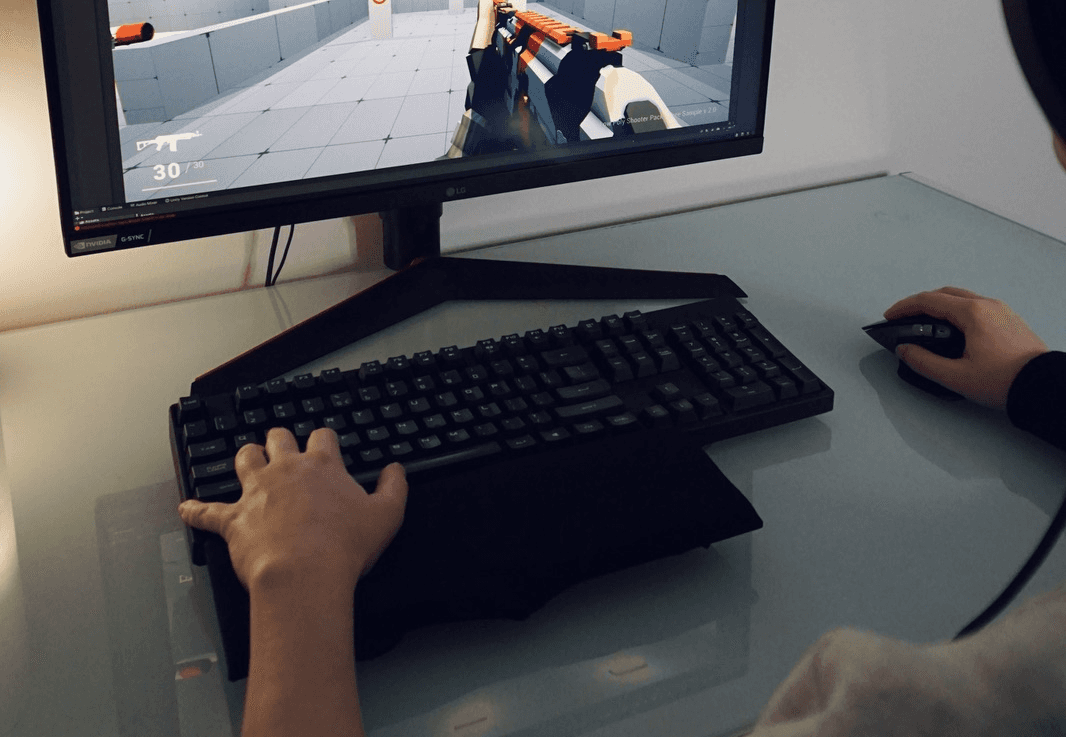
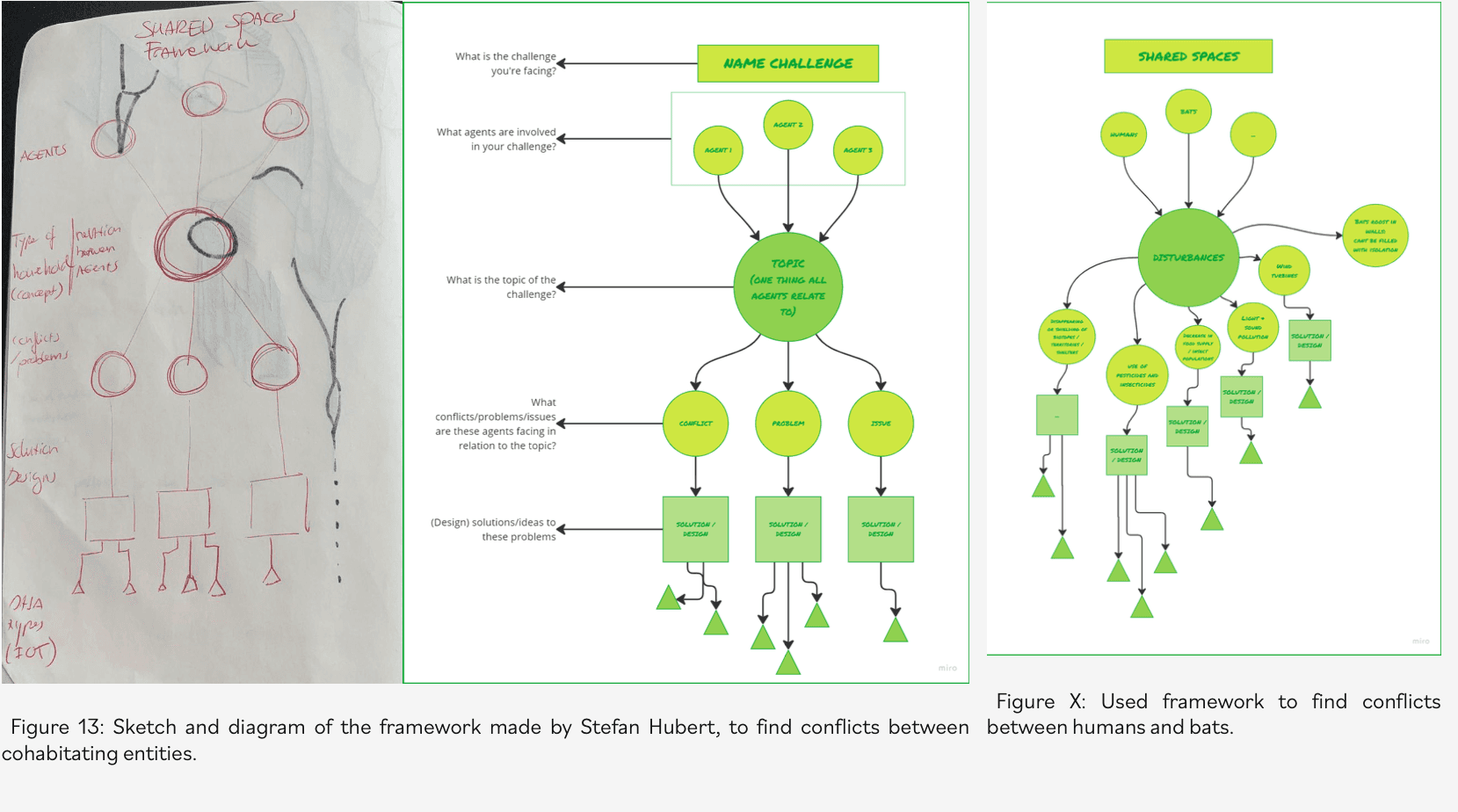


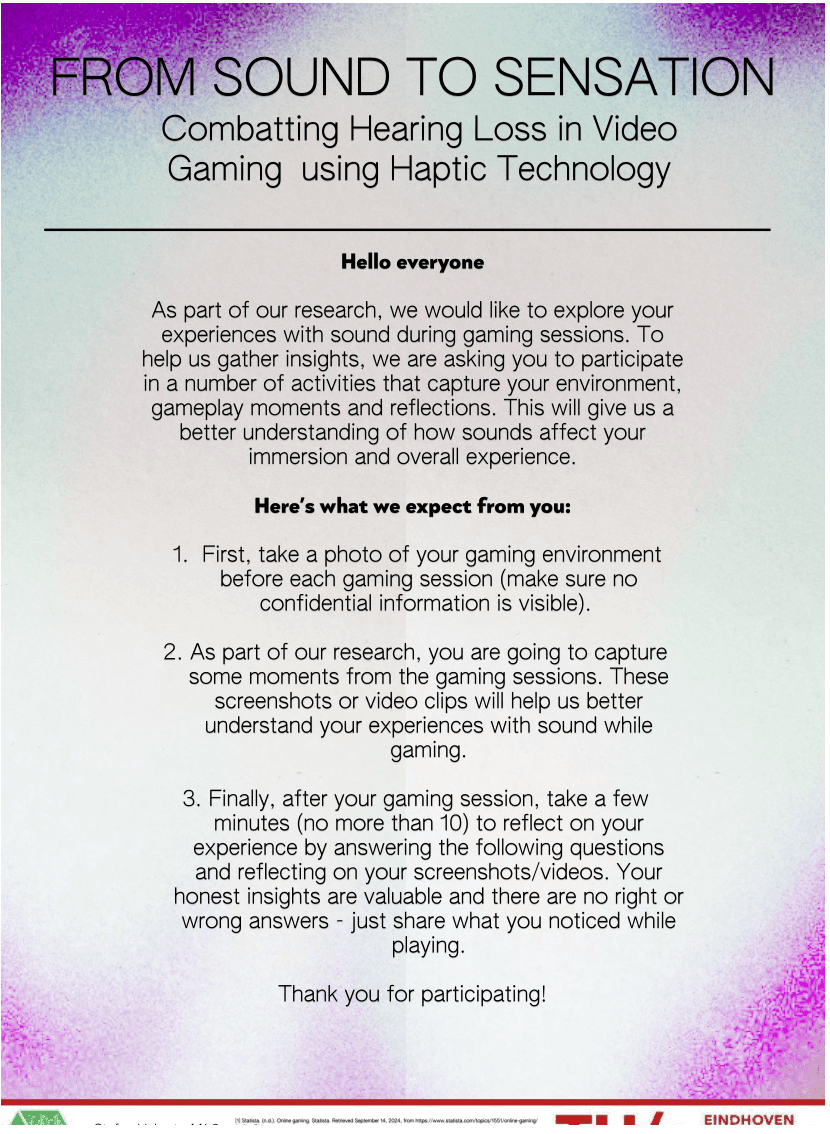
User setup, systems thinking, studio method, stakeholder mapping, cultural probe
Math Data & Computing
Math Data & Computing
I entered the master with a strong MD&C background from Chemical Engineering and IM. At first I treated this as separate from my design identity, focusing on making and aesthetics. Over time I came to see computation as a design material.
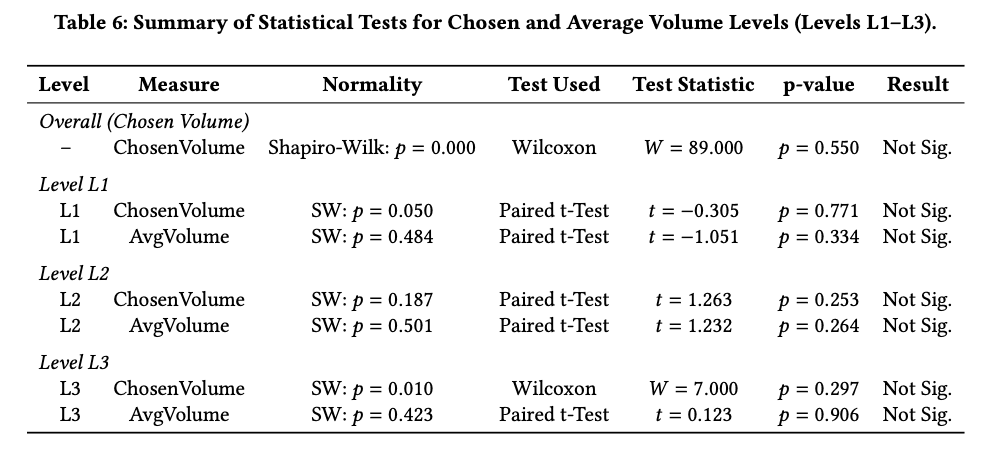
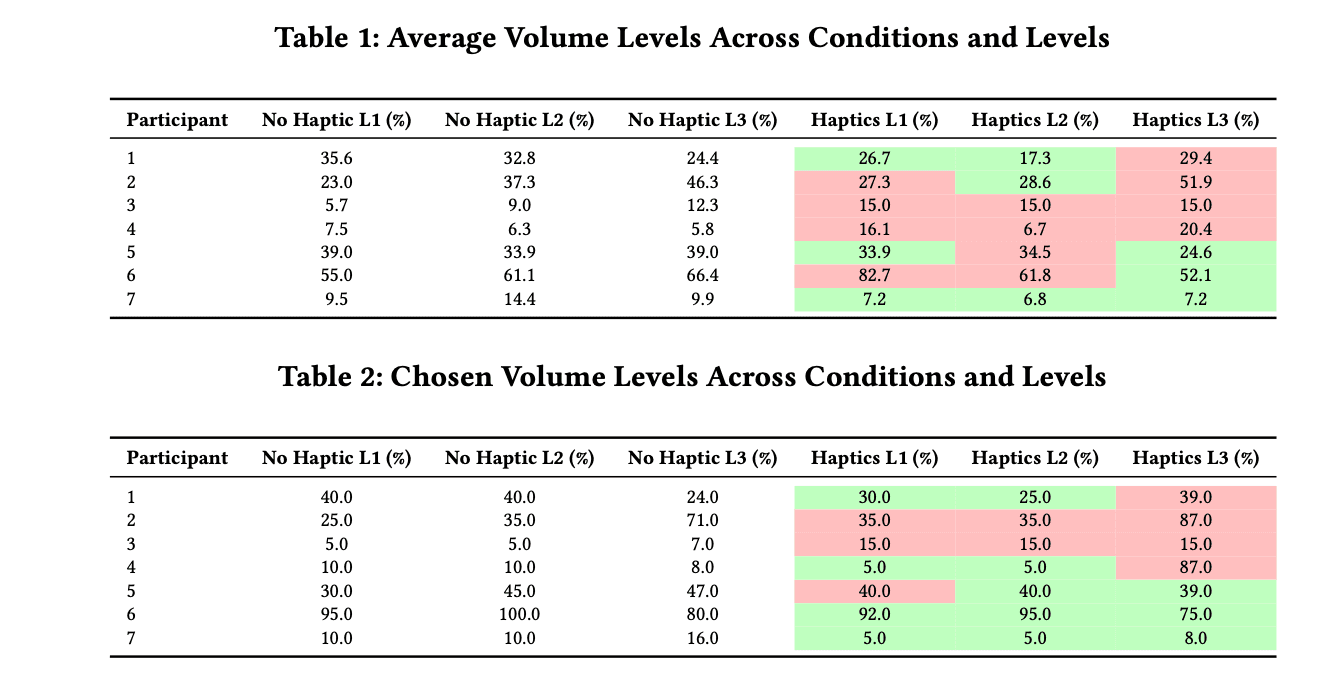
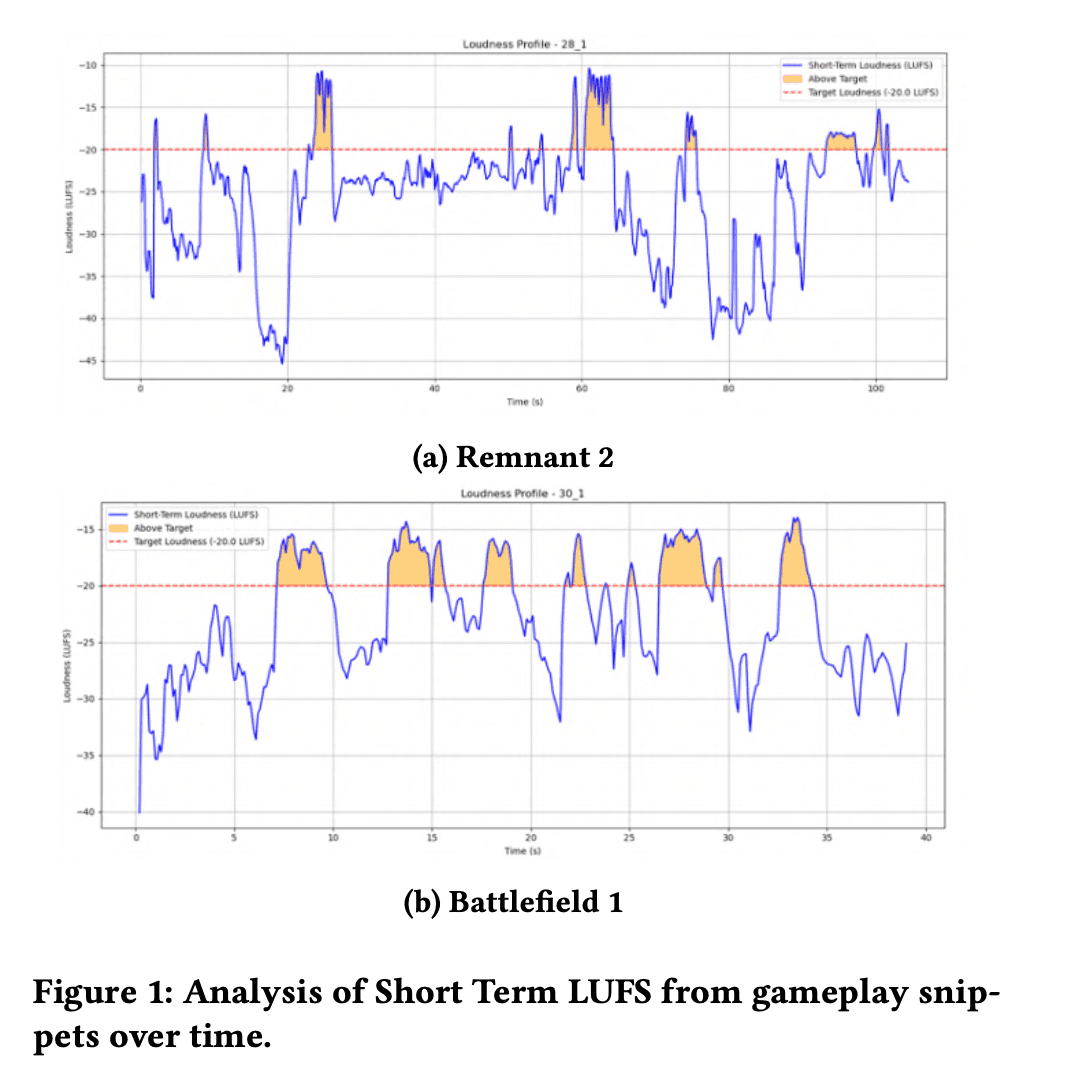
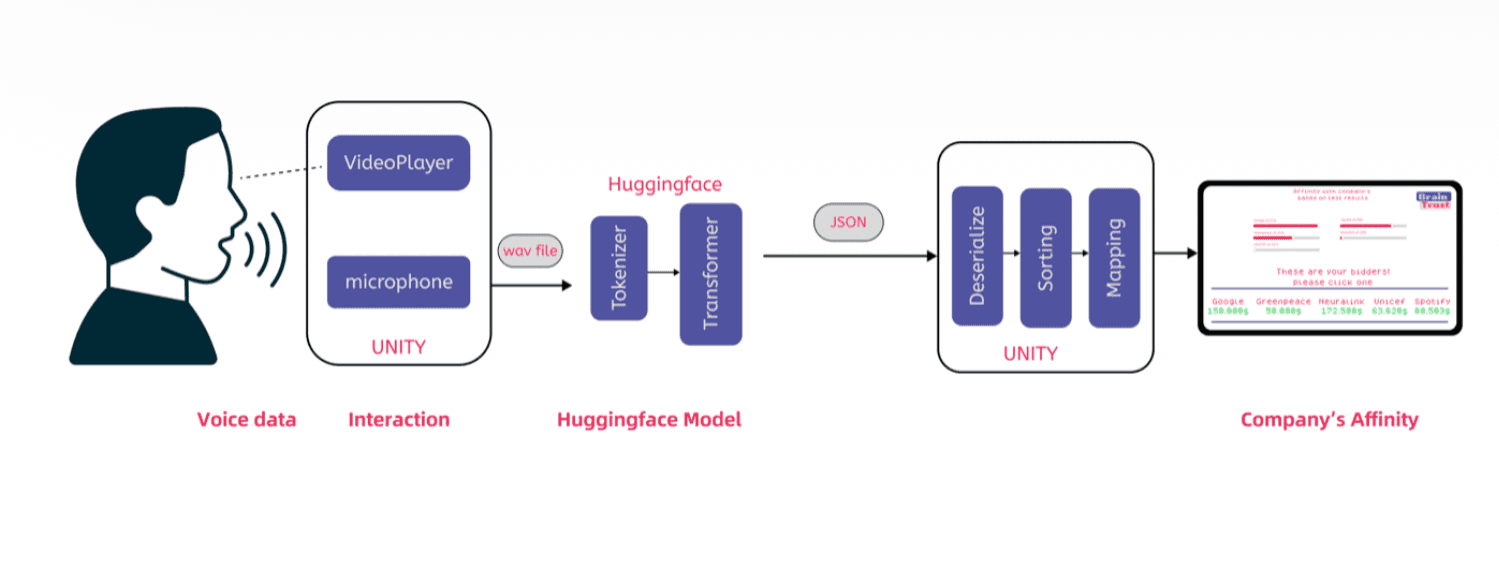
In M2.1 I connected hand tracking to spatial audio in C#, Unity and MediaPipe. In M1.2 I used Python and Jupyter for quantitative user-test analysis, combining statistical modelling with qualitative findings. Although n was too low for strong inference, the process taught me how data supports design reflection when treated carefully. In Data & Aestetics of AI, i used API's and emotion recognition for speculative design. MD&C became valuable once it started structuring interaction behaviour and decision-making, not just describing outcomes.
I entered the master with a strong MD&C background from Chemical Engineering and IM. At first I treated this as separate from my design identity, focusing on making and aesthetics. Over time I came to see computation as a design material.
In M2.1 I connected hand tracking to spatial audio in C#, Unity and MediaPipe. In M1.2 I used Python and Jupyter for quantitative user-test analysis, combining statistical modelling with qualitative findings. Although n was too low for strong inference, the process taught me how data supports design reflection when treated carefully. In Data & Aestetics of AI, i used API's and emotion recognition for speculative design. MD&C became valuable once it started structuring interaction behaviour and decision-making, not just describing outcomes.
Writing scripts in Unity, connecting hand tracking and positional head data over OSC to control spatial sound


Test test test
Test test test
Business & Entreperneurship
Business & Entreperneurship
B&E started as one of my stronger theoretical areas because of IM, and became concrete when my prototypes began touching external parties. In M1.1, Ecodorp Boekel showed interest in our project; we visited them and discussed implementation but cancelled because of timeframe and team constraints. The lesson was the distance between external interest and actual implementation: a concept can be meaningful and still need ownership, resources and stakeholder alignment.
In M1.2 I worked with HapticLabs as a collaboration. I presented at Night of the Nerds to communicate hearing loss during gaming to children, testing public engagement value. In M2.1 I contacted several companies, visited AMOLF, received an intenrship offer from HapticLabs and chose Impulse Audio Lab. There I made exploratory prototypes and presented them in Munich. The automotive context forced an early reality check, embedded hardware, safety and industry constraints limited some directions. B&E for me is now about translating between vision, prototype, stakeholder value and feasibility.
B&E started as one of my stronger theoretical areas because of IM, and became concrete when my prototypes began touching external parties. In M1.1, Ecodorp Boekel showed interest in our project; we visited them and discussed implementation but cancelled because of timeframe and team constraints. The lesson was the distance between external interest and actual implementation: a concept can be meaningful and still need ownership, resources and stakeholder alignment.
In M1.2 I worked with HapticLabs as a collaboration. I presented at Night of the Nerds to communicate hearing loss during gaming to children, testing public engagement value. In M2.1 I contacted several companies, visited AMOLF, received an intenrship offer from HapticLabs and chose Impulse Audio Lab. There I made exploratory prototypes and presented them in Munich. The automotive context forced an early reality check, embedded hardware, safety and industry constraints limited some directions. B&E for me is now about translating between vision, prototype, stakeholder value and feasibility.

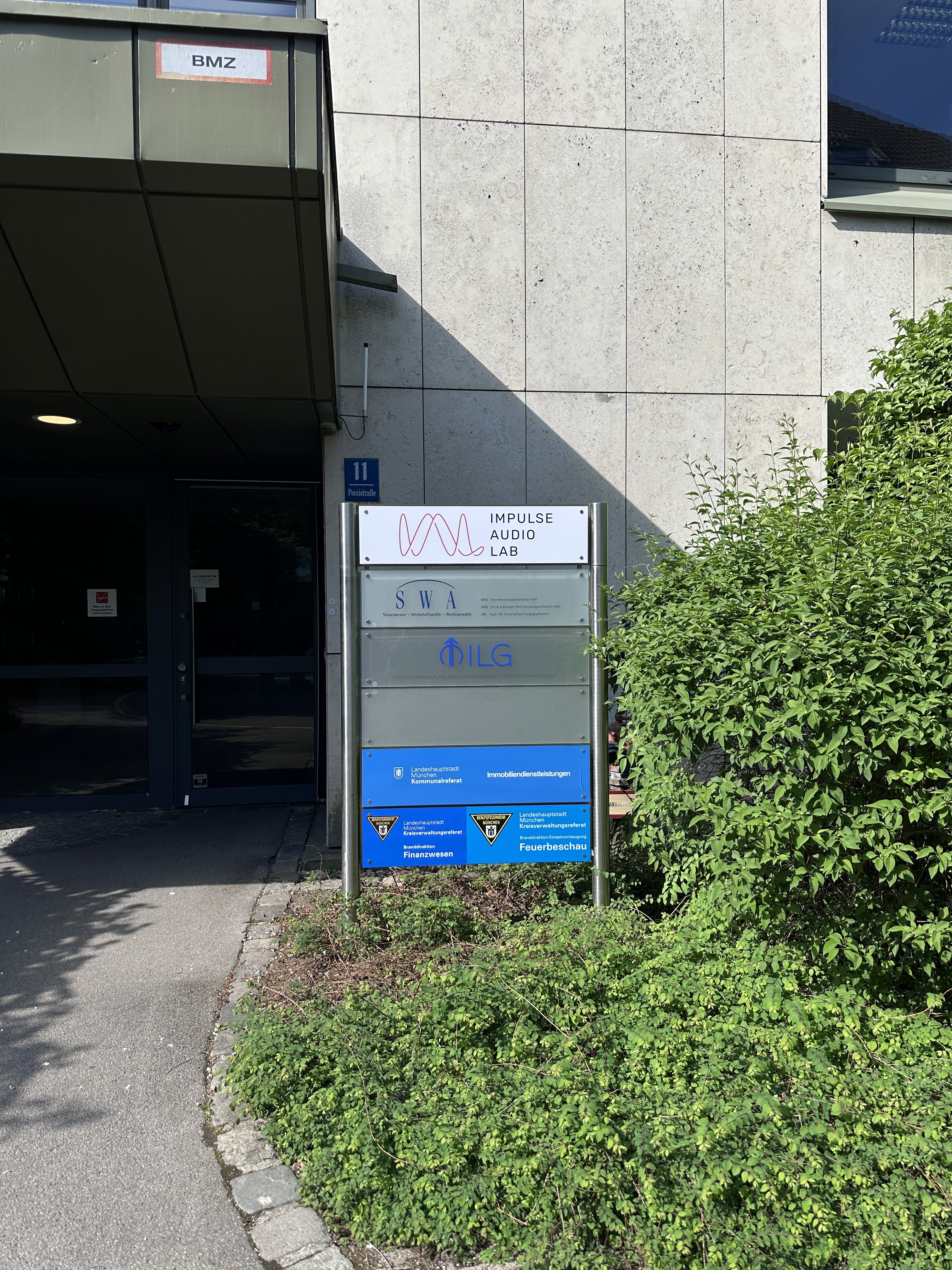
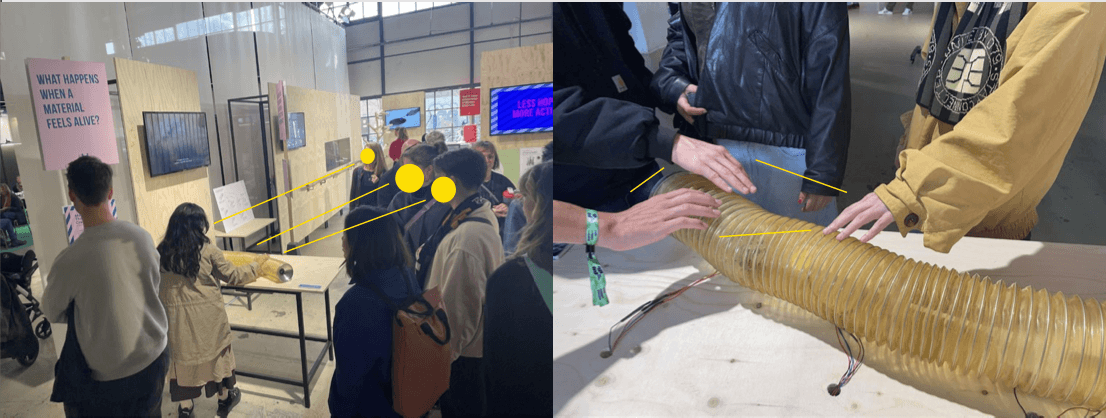

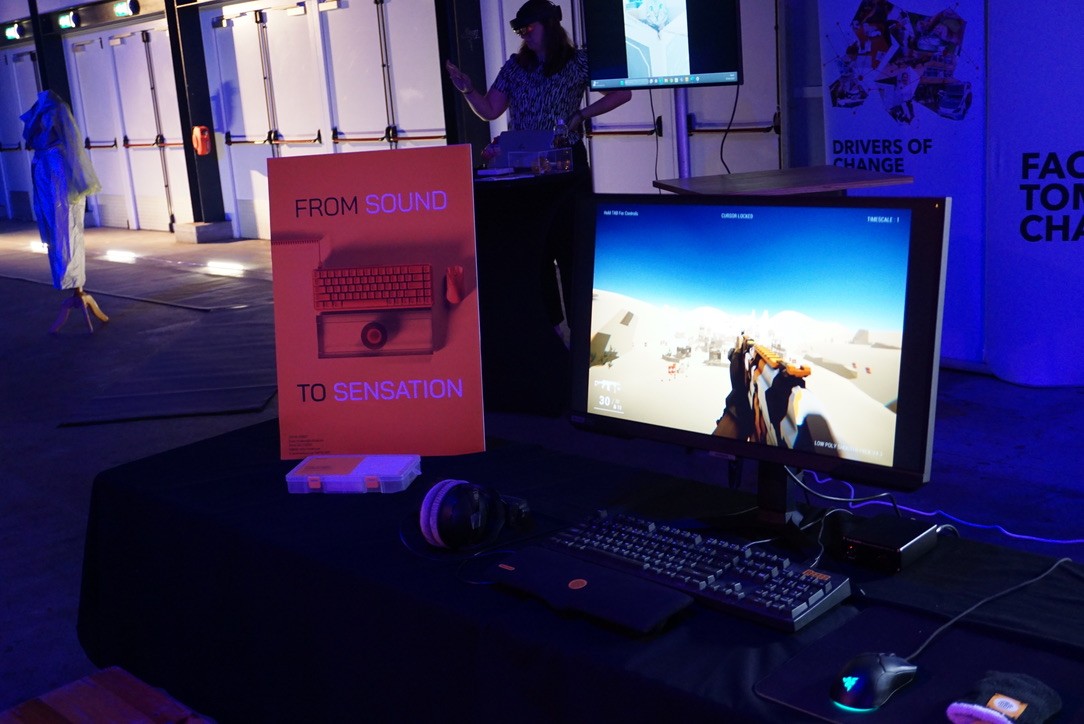
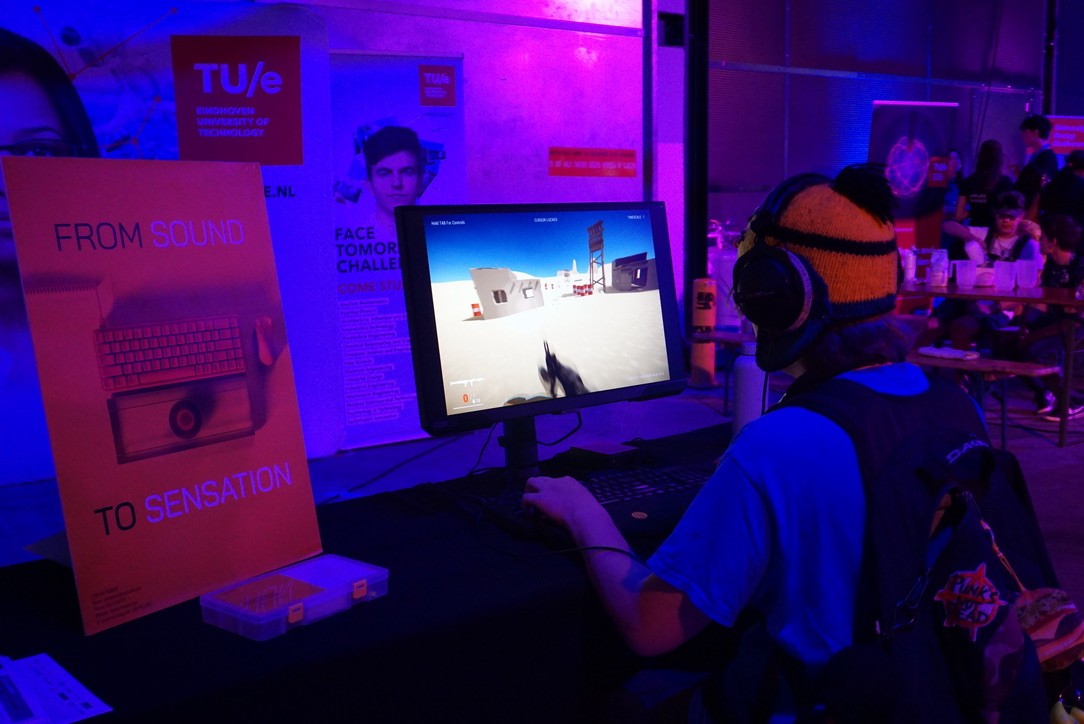
Companies visited, collaborated with, press releases and DDW/ NIght of the nerds pictures
Relationship between the Expertise Areas
Relationship between the Expertise Areas
The strongest growth in my master was not inside one area but in how the areas became dependent on each other. T&R made multimodal experiences tangible. C&A shaped their sensory and narrative quality. U&S decided when they mattered to people but also revealed new visions and trajectories. MD&C structured the data and behaviour underneath, while also becoming part of the aesthetic qualities. B&E placed prototypes in contexts where feasibility and stakeholder value became part of the design, linking back to early user need discory using U&S. Together they shaped my identity as a multimodal storyteller.
The strongest growth in my master was not inside one area but in how the areas became dependent on each other. T&R made multimodal experiences tangible. C&A shaped their sensory and narrative quality. U&S decided when they mattered to people but also revealed new visions and trajectories. MD&C structured the data and behaviour underneath, while also becoming part of the aesthetic qualities. B&E placed prototypes in contexts where feasibility and stakeholder value became part of the design, linking back to early user need discory using U&S. Together they shaped my identity as a multimodal storyteller.
